
Lore
Prophecies of the Known World
Sixth short of the seventh season of Histories & Lore
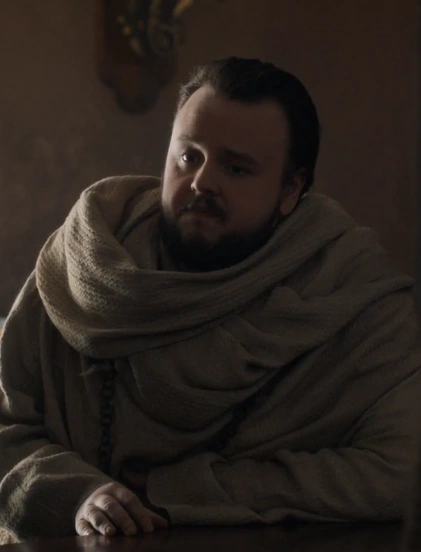
"Prophecies of the Known World" is the sixth short of the seventh season of Histories & Lore. It is the hundred and thirteenth short of the series overall. It was released on December 12, 2017 in Game of Thrones: The Complete Seventh Season. It was narrated by John Bradley as Samwell Tarly and written by Dave Hill.
Narration
Samwell Tarly: The maesters don't believe in prophecy, with good reason.
Some Maesters posit that the Children's magical Sight was invented long after they vanished from Westeros by singers hoping to thrill peasant girls. Not that most Maesters have much experience in what does or doesn't do that.
When Aegon the Conqueror came to the Iron Islands, the Priest King Lodos claimed his divine father, the Ironborn's Drowned God, had shown him krakens pulling Aegon's ships into the deep.
No krakens ever arrived, and even if they had, wouldn't have stopped Aegon and his dragons without wings of their own.
Confused, Lodos filled his pockets with stones and walked into the sea to "take counsel with his father." Thousands followed him, but apparently, the Drowned God didn't appreciate a crowd.
Their corpses washed up on the Iron Islands for years.
According to legend, House Targaryen survived the Doom of Valyria thanks to Daenys the Dreamer, who foresaw the calamity and convinced her father to flee their homeland. It could be true. The Targaryens were always a bit more.
But as Maester Yandel points out, in the East, the Targaryens were one of a thousand minor noble families, and in Westeros, they became kings. Politics, not prophecy, could have drawn them to our shores.
Politics can also explain the prophecies of Daemon II Blackfyre, a Targaryen bastard rumored to possess the family gift.
While posing as a hedge knight, he told a future Lord Commander of the Kingsguard that he dreamt of a dragon hatching at Whitewalls Castle and took it as a sign that he'd win the Iron Throne.
Perhaps if he'd slept a bit longer, he'd have dreamt of the King's Hand putting down his rebellion a day later, before it even began.
Most Maesters dismiss all Targaryen claims of prophecy as mystic nonsense, a relic of their Eastern ancestry. To be fair, across the Narrow Sea, there isn't a market without a Warlock from Qarth telling fortunes or a shadowbinder from Asshai reading fates in blood.
Or so I hear from the Maesters.
But when I was a boy, I overheard the cook whispering to a maid about a woods witch camping outside Horn Hill, who was called "Maggy the Frog."
Now I realize it was probably a corruption of the Eastern word for wizards: maegi. One day my father rode out hunting, though no game was in season, and whatever power she had likely didn't save her.
Even the wisest Maesters, however, have no answers for the red priests who prophesy about the return of the Long Night.
For thousands of years, they've kept watch for the return of the Prince Who Was Promised, who will be born amid salt and smoke to drive off the darkness once again.
Prince of what realm, promised by whom and to whom? The prophecy doesn't say, but at the very least, it confirmed that not even Essos escaped the Long Night.
I imagine the cataclysm must have confused the East. Unlike Westeros, they wouldn't have known of the Night King or the White Walkers or the war waged by the First Men and the Children of the Forest.
They would have just seen a terrible winter descend and linger far too long until spring magically returned to the world. Yet somehow, maybe from passing merchants, maybe in their fires, the red priests saw the truth.
Now the truth is here again for anyone to see, but the Maesters refuse. They debate and question and doubt not to choose the wisest course, but because they're too used to doing nothing else.
Most prophecies might be lies, but not all of them.
The Long Night is coming. If we don't believe that, well, we won't need any prophecy to tell us our future.
Cast
Sources
Adapted from the original article, under CC BY-SA 3.0.