
Lore
Kinslaying
Act of slaying a family member and a great taboo in Seven Kingdoms
Kinslaying is the act of slaying a family member and a great taboo in Seven Kingdoms. Whoever commits it is dubbed a kinslayer. Any individual who slays a member of their own family is believed to be cursed forever in the sight of gods and men.

Like incest or violating guest right, kinslaying is considered an abomination to every major religion in Westeros, including the Faith of the Seven, the Old Gods, and the Drowned God.
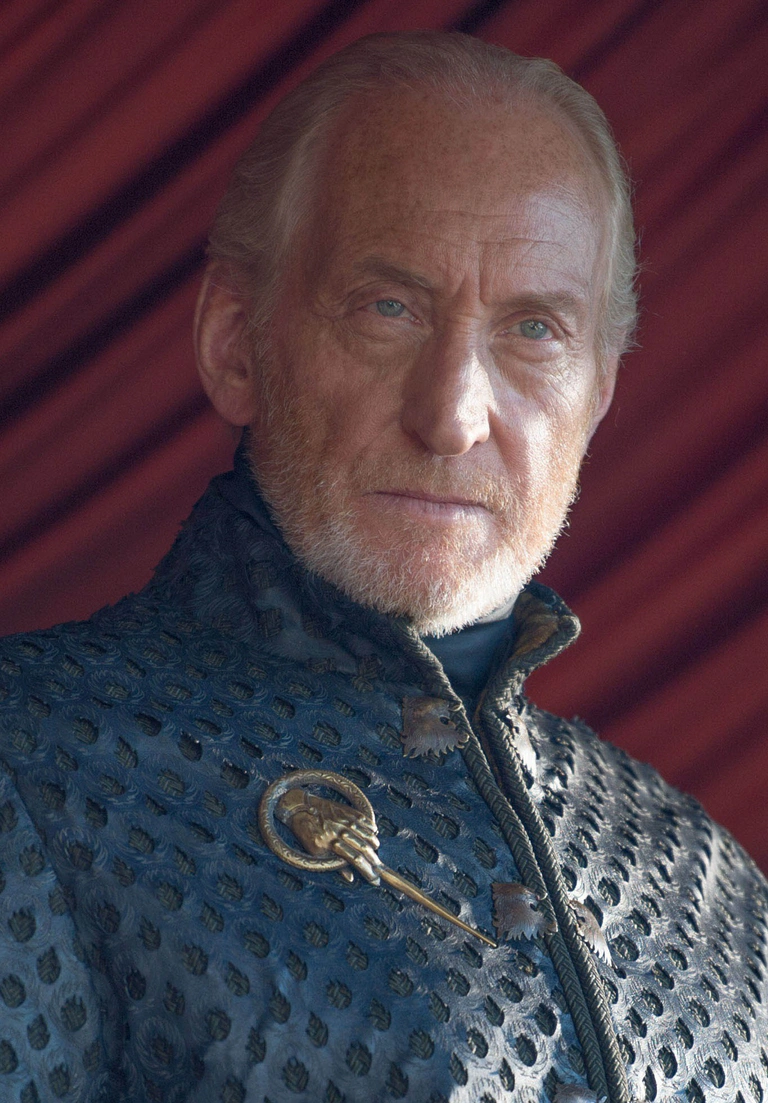
The taboo associated with kinslaying is strong enough to stay the hand of even the most ruthless men. Tywin Lannister would have liked nothing more than to kill his son Tyrion the day he was born, because his mother Joanna Lannister died giving birth to him and for the shame he brought on their family for being born a dwarf. However, Tywin felt that House Lannister was above the shame and curse of kinslaying, so he relented and let Tyrion live.
If a mother dies in childbirth, her offspring is not considered a kinslayer by the aforementioned faiths because there was no intent and it wasn't really their fault. The reactions of family members to the child can still vary, however, as sometimes they irrationally blame the child for the mother's death. Tywin always blamed Tyrion for "killing" his mother since she died giving birth to him, as did his sister Cersei Lannister. In contrast, his brother Jaime Lannister insisted that it wasn't his fault and always treated Tyrion with kindness and respect.
Known kinslaying
Orys I was killed by his brother.
King Maegor Targaryen killed his nephew Aegon in the Battle Beneath the Gods Eye.
Larys Strong orchestrated the deaths of his father, Lord Lyonel, and his brother, Ser Harwin, by hiring prisoners to burn them at Harrenhal.
Aemond Targaryen was responsible (even if it was not his intention) for the death of his nephew Lucerys Velaryon. Aemond later killed his father's cousin Rhaenys Targaryen during the Battle at Rook's Rest.
Ser Erryk Cargyll killed his twin-brother Arryk Cargyll.
Brynden Rivers, who killed his half-brother Daemon Blackfyre and two of his sons during the Battle of Redgrass Field.
Maekar Targaryen, who killed his brother Baelor Targaryen during the trial of seven of Duncan the Tall.
Robert Baratheon, who killed his first cousin once removed Rhaegar Targaryen at the Battle of the Trident.
Craster sacrificed his male offspring to the White Walkers.

King Stannis Baratheon committed two kinslayings:
He conceives a shadow assassin with Melisandre to kill his brother Renly Baratheon.
Along with his wife Selyse, he allowed Melisandre to burn their daughter Shireen, believing that the Lord of Light will allow his army to survive and defeat House Bolton.
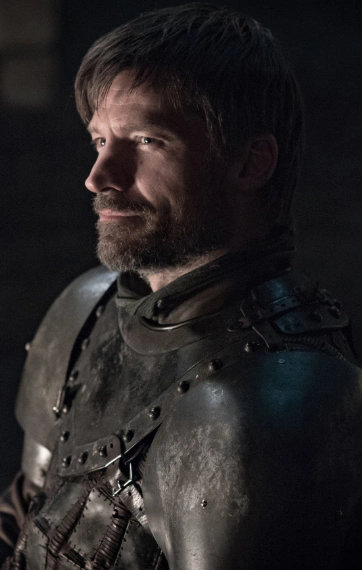
Ser Jaime Lannister, who murders his distant cousin Alton Lannister in his attempt to escape captivity.
King Robb Stark is accused of this by Lord Rickard Karstark, when the former is about to execute the latter for treason.
Due to the distant blood ties between House Stark and House Karstark, it is debatable if Robb can be considered a kinslayer.
Meera Reed, who killed her brother, Jojen Reed, out of mercy after he was mortally wounded by a wight.
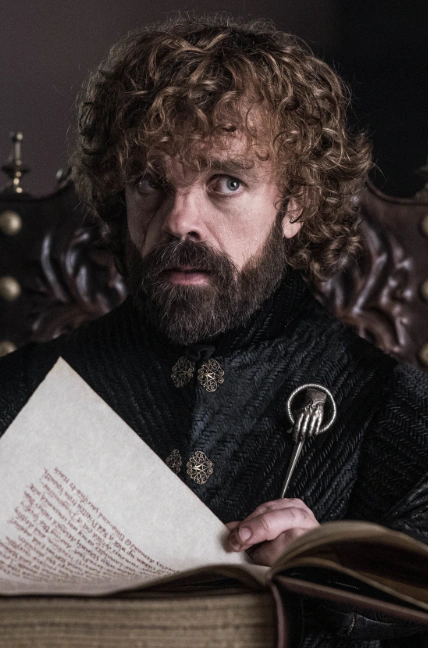
Tyrion Lannister, who murders his father, Tywin Lannister. Tyrion later sarcastically quipped that because his mother Joanna died giving birth to him, from a technical standpoint he had "killed" both of his parents, making him the greatest Lannister-killer alive.
Obara Sand, who murders her cousin, Trystane Martell, in a plot to take over Dorne.
Ramsay Bolton, who murders his own father Lord Roose Bolton after the birth of his trueborn half-brother. Ramsay did this for fear that his father would disinherit him for his failures and name his newborn son by Walda as the new heir to House Bolton instead. He then proceeds to commit kinslaying a second time by turning his hunting dogs on his own newborn half-brother.
Euron Greyjoy, who murders his brother, Balon Greyjoy, by throwing him off a rope bridge at Pyke in the middle of a storm.
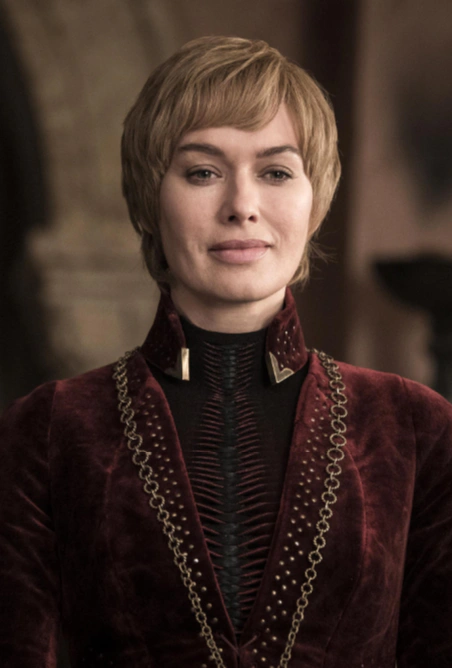
Cersei Lannister orchestrated the destruction of the Great Sept of Baelor which killed her uncle Ser Kevan Lannister and her cousin Lancel.
Sandor Clegane, who throws himself and his brother Ser Gregor Clegane off the Red Keep and into an inferno created by Drogon, during the Battle of King's Landing. However, as Gregor was technically a reanimated corpse, thus not being alive, this is debatable.
Jon Snow, born Aegon Targaryen, who assassinates his aunt Daenerys Targaryen, to prevent more massacre after Daenerys laid waste to a surrendered King's Landing.
Alleged and suspected kinslayings
Ser Gregor Clegane, suspected to have murdered his younger sister as well as his father.
Queen Rhaenyra Targaryen is suspected by Rhaenys Targaryen to have plotted the murder of her husband and cousin Laenor Velaryon. Laenor actually never died and it was all orchestrated so he could flee to Essos and live in peace with Qarl Correy and Rhaenyra could marry Daemon Targaryen to prepare themselves to face the Greens. She has also been accused of plotting the murder of her nephew Jaehaerys Targaryen.
Ramsay Snow is suspected of murdering his trueborn half-brother Domeric Bolton, in order to further his position in House Bolton. It is also hinted that Ramsay had impregnated Violet, one of his bedwarmers, and had both her and their unborn child killed.
Tyrion Lannister has been accused of poisoning his nephew King Joffrey Baratheon at his own wedding. The actual killer is Olenna Tyrell, with help from Petyr Baelish and Dontos Hollard, to spare her granddaughter Margaery Tyrell from enduring marriage to Joffrey.
In the books
In the A Song of Ice and Fire novels, the taboo against kinslaying is often mentioned by various characters, among them Tyrion, Ygritte, Davos, Jaime, Rickard Karstark, Victarion Greyjoy, Roose Bolton, Jorah Mormont, Cregan Karstark, and Aeron Greyjoy.
It is pretty much the only reason that neither Tywin nor Tyrion ever try to kill Joffrey. Soon after Joffrey is crowned king it rapidly becomes apparent that he isn't simply vicious and cruel: he's a sadistic madman. Moreover, Joffrey is so utterly impulsive that he publicly, brazenly commits acts of petty cruelty that even the most ruthless kings of the past would have hesitated to commit, simply because it would be counter-productive. After Joffrey needlessly starts city-wide riots, Bronn openly asks Tyrion why they don't simply assassinate Joffrey given that he causes far more problems than he solves, and moreover, actually has a pliable younger brother (Tommen) whom the Lannisters could easily use to replace him as their puppet king. Essentially the only reason Tyrion gives is that he won't kill his own nephew.
Jaime, hearing that Tyrion is charged with Joffrey's murder, muses that in the eyes of gods and men, kinslaying is considered to be even worse than kingslaying. He finds it difficult to believe his brother would commit such a crime. After learning the truth about Tysha, Tyrion is so angry that he tells Jaime (falsely) that he killed Joffrey, and shortly afterwards, he actually commits a kinslaying when he kills his father. Apparently, Tyrion is no longer bothered by the taboo because in the fifth novel, he remorselessly quips on several occasions that he killed his father and nephew, and even takes the "credit" for his mother's death; sometimes, Tyrion contemplates about killing his siblings too (though his feelings about Jaime are more conflicted, during his time in Volantis, Tyrion outright tells someone, within earshot of Jorah Mormont, that if Daenerys takes him into her service, the only reward he intends to ask of her is that he might be allowed to rape and kill Cersei.)
Characters in Westeros who have never met Daenerys, as they start to hear news of her string of conquests in Slaver's Bay, are sometimes appalled to hear that her husband Drogo killed her own brother Viserys as she watched (some speculate that she convinced Drogo to murder Viserys to advance her own claim to the Iron Throne, or as revenge because Viserys married her off to Drogo instead of taking her as his wife per Targaryen tradition). This is largely because they didn't know how much of a monster Viserys was, or that he violated Dothraki law by drawing a sword in Vaes Dothrak and threatening Drogo's unborn son, and thus Drogo was entirely within his rights to execute him. Then again, in these discussions, other characters point out the well-known madness that runs in the Targaryen family, and accurately guess that Viserys might have been not much better than his crazed father King Aerys II Targaryen.
In the books, Stannis never admits that he ordered Melisandre to send the shadow demon against Renly, thus it is unclear if he is actually guilty of kinslaying. He was ready, though reluctantly, to have his bastard nephew Edric Storm sacrificed, but Davos prevented that kinslaying.
Theon Greyjoy is sometimes inaccurately accused of being a kinslayer for his alleged execution of Bran and Rickon Stark, though as a highborn hostage and ward of the Starks he was not actually their blood relative. He is referred to as Theon Turncloak.
Ramsay Bolton is suspected of poisoning his trueborn half-brother Domeric Bolton to take his place as Roose's heir, and Roose confides to Theon that he believes Ramsay will kill any trueborn child Roose has in the future, as the taboo of kinslaying means nothing to him. Domeric is never mentioned in the television show.
"Alton Lannister" in the TV series is a renamed version of Cleos Frey from the books. Cleos's mother Genna is actually Tywin's sister, making Cleos a first cousin to Jaime. The TV series apparently renamed Cleos for fear that the audience would be confused why a man named "Frey" was fighting for the Lannisters in Season 2 (before the Freys turn on Robb Stark in Season 3), so they renamed him as a Lannister to make clear what side he is on. Jaime didn't kill Cleos Frey in the books, rather he accompanied Brienne of Tarth on the mission to return Jaime to King's Landing for a prisoner exchange, but he was killed by outlaw bandits along the way. The TV series later made clear in "A Man Without Honor", however, that "Alton Lannister" isn't exactly the same character as Cleos Frey, but is instead a far more distant cousin. Jaime has difficulty even remembering who Cleos's mother is, and Alton says she is Cynda Lannister, not Jaime's well-known aunt Genna. So on the one hand, Jaime was never a kinslayer in the books but the TV series has him kill Alton. On the other hand, the TV series changed the relationship of "Alton Lannister" so he actually isn't a very close relative of Jaime at all - it is debatable how much the shame of kinslaying would apply to a fifth or sixth cousin. Moreover, it's vaguely implied that "Alton" was willing to give his life in a heroic escape attempt if it would free the famous Jaime (though he didn't understand that when Jaime said Alton wouldn't survive the escape attempt, he meant that he would kill Alton to distract the guard).
Euron Greyjoy killed three of his brothers: Harlon, Robin and Balon. He is not brazen enough to admit that in public, only to Aeron whom he currently holds captive. Euron comments that Harlon and Robin were killed by his own hands, but Balon was not. Based on the prophecy of Balon's death, it is assumed Euron hired a Faceless Man for the assassination.
Victarion killed his pregnant wife (who was either raped or seduced by Euron), thus killing also his unborn nephew. He would have also killed Euron, but Balon forbade him due to the taboo of kinslaying.
Killing a relative by marriage, instead of a blood relative, is still considered kinslaying, because in a spiritual sense they have become part of the same family. It's possible that it isn't considered quite as bad but only by a matter of degree, i.e. killing your own brother or son is generally seen as somewhat worse than killing your own brother-in-law, though both are still reviled. Lord Tytos Blackwood's son was killed at the Red Wedding, and he notes that one of Lord Walder Frey's wives was herself a Blackwood, but apparently, the bonds of marriage mean nothing to Lord Walder. This wife was actually the mother of Lame Lothar Frey, meaning that Lame Lothar was responsible for the death of his kinsman Lucas Blackwood - given Lothar's club foot he might not have participated in the fighting directly, but he was one of the main masterminds who orchestrated the massacre and gave the orders. The exact relationship between Lame Lothar's Blackwood mother and the main Blackwood family hasn't been given, though the TV series might have condensed this. Just as kinslaying is considered a worse crime than regicide, violation of guest right is considered to be an even worse crime than kinslaying, so any kinslaying which occurred at the Red Wedding is overshadowed in the narrative by how outrageous and unthinkable it was that Lord Walder murdered guests under his own roof.
According to Ygritte, the gods hate kinslayers, even when they kill kin unknowingly. She told Jon a story about a wildling king named Bael the Bard, who kidnapped the daughter of one of the Stark lords, known as "Brandon the Daughterless". One day, the daughter returned with an infant, who eventually became the new Lord Stark. Thirty years later, the son fought against Bael (unaware of their kinship) and killed him. Bael recognized his son and allowed him to kill him, for he could not shed the blood of his kin. When Lord Stark returned from the battle and his mother saw Bael's head upon his spear, she threw herself from a tower in her grief. Her son did not long outlive her: one of his lords (presumably a Bolton) peeled the skin off him and wore it for a cloak.
Among the ironborn, it seems that the taboo is limited only to blood relatives, not relatives by marriage: Victarion Greyjoy wanted to kill Euron (for seducing/raping and impregnating Victarion's wife) but did not because Balon forbade him due to the taboo; no ironborn, however, stopped Victarion from killing his wife and unborn nephew, nor did anyone disapprove of that.
George R.R. Martin has said that there are considered to be different degrees of kinslaying, depending on the relationship and circumstances, though these may be unofficial. Degrees of kinship are taken into account: killing your sibling or parent are both reviled, and what is often thought of as "kinslaying", but killing a parent is considered the worse of the two. Killing an uncle or nephew is also viewed negatively (such as when Stannis pondered killing his bastard nephew Edric Storm, replaced with his other bastard nephew Gendry in the TV series). All of these variants are considered to be much worse than killing a distant cousin, though this is still frowned upon (Robert killed Rhaegar, even though they were second cousins, but Robert wasn't universally reviled for this). The aristocracy of the Seven Kingdoms is heavily intermarried and many succession wars centered around rival claims between different groups of distantly related relatives. Martin specifically explained that Rickard Karstark was "stretching" when he warned Robb that if he executed him it would be considered kinslaying, given that the Karstarks branched off from the main Stark family around one thousand years ago.
In the fifth novel, Cregan Karstark tries to force Alys to marry him, but is imprisoned by Jon Snow. Similarly to Rickard, Cregan warns Jon that "Stark and Karstark are one blood", therefore killing him will make Jon a kinslayer. Cregan's claim is weaker than Rickard's, because Jon's name - as he points out - is Snow, not Stark. In that case, it does not really matter whether Cregan is correct, since Jon does not intend to execute him (not because of the kinslaying issue, but because the Watch does not take part in the quarrels of the realm).
It is unclear whether passively allowing a kin to be killed - rather than kill actively - can be considered as kinslaying. Jon, hearing that Axell Florent has done nothing to prevent his brother Alester's death, muses "If he is not a kinslayer, he is the next best thing... what sort of man can stand by idly and watch his own brother being burned alive?". If Jon is correct, Daenerys can be considered as kinslayer for doing nothing to prevent her brother's death; it seems unfair, though, that Viserys, who threatened to cut his pregnant sister open, should have been protected under the same taboo he was about to violate.
Martin also said that the circumstances of kinslaying are weighed by degrees (perhaps unofficially). Personally killing your own kin (with a sword, arrow, poison, etc.) is reviled, and hiring an assassin to specifically kill your kin for you is nearly as detested. If two brothers are leading rival armies against each other in war (such as Stannis and Renly), there are several variable outcomes. If Renly had announced to his army that he would reward the man who killed Stannis, or gave standing orders that Stannis was not to be taken alive, it would be viewed very negatively, though not quite as much as if Renly personally killed Stannis. If Renly publicly announced strict orders that he wanted Stannis captured alive, but Stannis accidentally ended up getting killed in the battle anyway, it would not be seen as nearly so negative. If Renly attacked Stannis's army but did not think to give specific orders about whether he wanted Stannis taken alive or dead, it would be seen as morally falling somewhere between the two, because he should have given more specific orders if he was concerned about avoiding kinslaying.
Therefore, personally murdering your own parent is considered to be the absolute worst kind of kinslaying - such as when Tyrion confronted his father Tywin with a crossbow and shot him dead. Robb Stark would, objectively, not be greatly blamed for executing Rickard Karstark, because he was a very distant cousin, and rather than "murder" Robb was within his rights to execute him for treason - though he chose to formally carry out the sentence with his own sword in hand.
Several historical characters were also suspected or confirmed kinslayers, most notably within the Targaryen dynasty.
Visenya Targaryen is suspected to have poisoned her nephew/stepson, King Aenys I, to get her own son Maegor on the throne. Others suspect she did it for the good of the Targaryen dynasty, since Aenys was a weakling and unable to contain the Faith Militant uprising.
Maegor then went on to kill two of his nephews, Aegon and Viserys. The former was killed in a dragon duel with Maegor and Balerion at the Battle Beneath the Gods Eye, and the latter was tortured to death when his mother and younger siblings, Jaehaerys and Alysanne, escaped the capital (initially Viserys was tortured for information on his mother and siblings' whereabouts; once Maegor was convinced Viserys had no notion where they'd gone, he ordered the torture to continue until fatal, then left Viserys' corpse in the yard of the Red Keep in hopes of luring his mother out of hiding to demand a proper funeral for her son).
Some have suspected that Queen Elinor Costayne, one of Maegor's "Black Brides," killed him since she was the first one to find him dead. However, it is more likely that Maegor committed suicide.
Larys Strong was one of the suspects of starting the fire that killed his father Lyonel and brother Harwin. Other suspects included Daemon Targaryen, Viserys I, Corlys Velaryon, and the curse of Harrenhal.
Aemond Targaryen murdered his nephew Lucerys Velaryon by chasing him down with Vhagar. Unlike the TV series, Aemond's actions were intentional, and he received the moniker "Aemond the Kinslayer."
Some, such as Oberyn Martell, suspect King Viserys II Targaryen poisoned his nephew Baelor I to gain the throne, though Tyrion believes that Baelor starved himself to death.
It was widely believed that Aegon IV Targaryen poisoned his father Viserys II to hasten his inheritance.
Brynden "Bloodraven" Rivers was called a kinslayer after he and his company of archers, the Raven's Teeth, killed Brynden's half-brother Daemon Blackfyre with arrows. Daemon's sons Aegon and Aemon were also killed.
Maelys Blackfyre's second head was believed to be the remnant of a twin that he absorbed in the womb. He later killed his cousin Daemon for control of the Golden Company.
Sources
Adapted from the original article, under CC BY-SA 3.0.