
Person
Maegor Targaryen
Hand of the King
Aegon's own son, Maegor the Cruel, was killed by the very Iron Throne his father had forged. If you believe the tales. If you don't, then perhaps "The Cruel" is not a wise name for a king to earn.
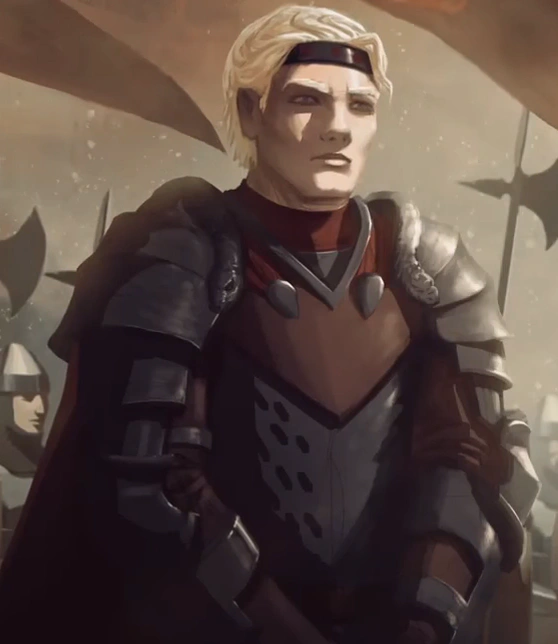
King Maegor I Targaryen, infamously dubbed Maegor the Cruel, was the third king of the Targaryen dynasty to sit on the Iron Throne. As his moniker suggests, he is known as the first of the most tyrannical Targaryen kings to ever rule the Seven Kingdoms.
Background
King Aegon the Conqueror had two children by his two sister-wives: his firstborn son Aenys with his sister Queen Rhaenys, and his second-born son Maegor with his sister Queen Visenya Targaryen. When Aegon I eventually died, Aenys succeeded him as the second king on the Iron Throne.
The Targaryens had incestuously married brother to sister for generations (whenever possible) to "keep the bloodline pure," in the custom of their Valyrian ancestors. For that matter, Aegon I broke not only the Faith's rules against incest, but its rules against polygamy, as he was married to both of his sisters at the same time.

The Faith was not in much position to challenge the victorious Targaryen army after the Conquest, or their massive dragons, but Aegon I was wise enough to tread lightly with the Faith: both sides tacitly agreed that the Targaryens' incestuous marriages were a relic of their past, which would soon fade. Aegon I did not intend for future generations of his new dynasty to continue to have incestuous marriages, and in return, the Faith did not press the matter for the remainder of his life. Aegon I eventually died and was succeeded by his elder son, Aenys.
To the surprise of all, however, later in his reign King Aenys tactlessly wed his daughter to his own son: the incestuous marriage of Princess Rhaena and Prince Aegon broke the Targaryens' prior promise to the Faith, which could stand the abomination no longer. The new High Septon led the denunciation of the Targaryens, and the military order of the Faith of the Seven, the Faith Militant, rose up in open revolt.
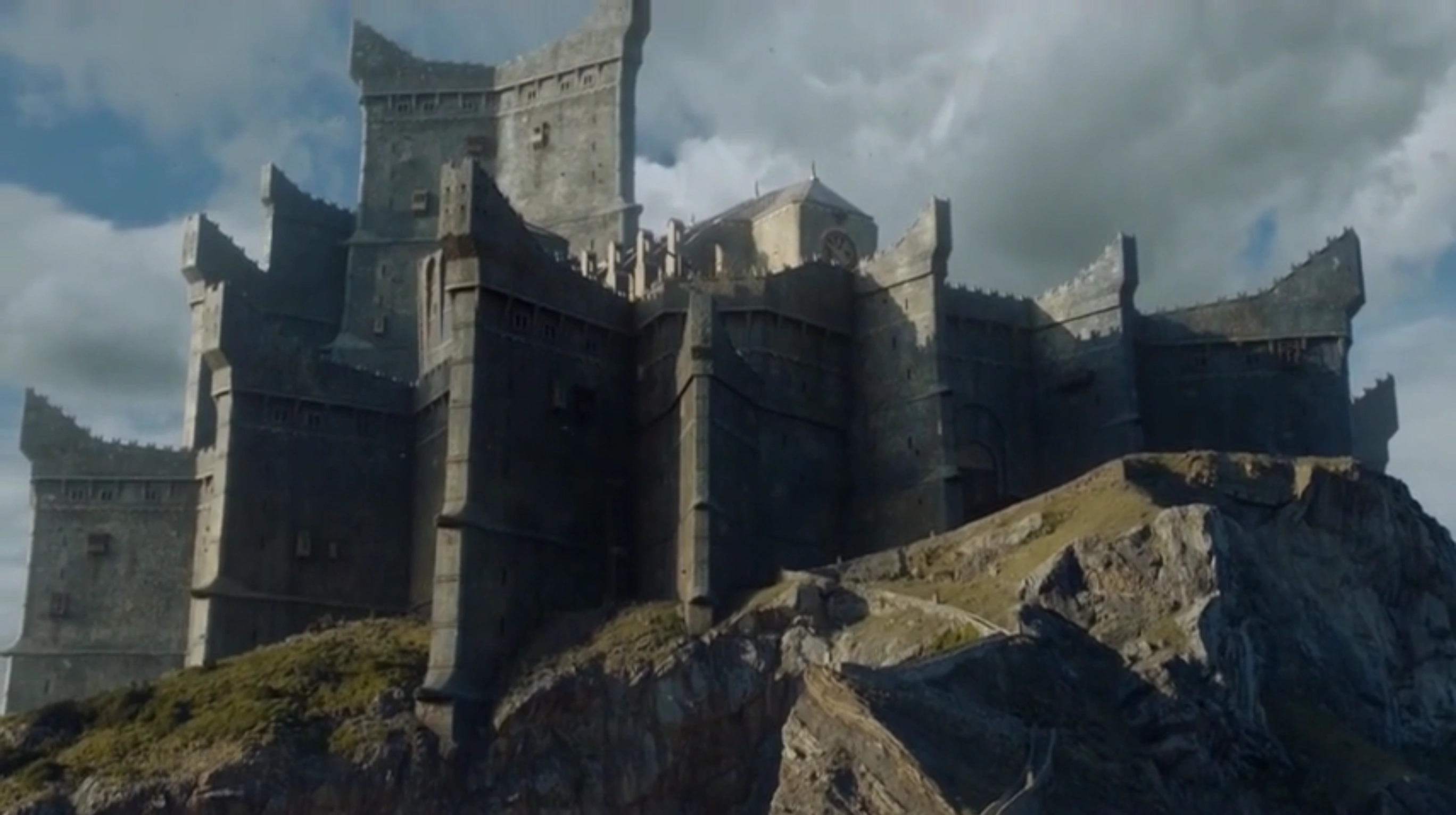
King Aenys proved to be an utter weakling in the face of the revolt and was completely overwhelmed. As the Faith Militant attacked lords that still supported him across the Seven Kingdoms, one particularly zealous force of the order even managed to scale the walls of the (still under construction) Red Keep, and would have killed Aenys and the royal family if not for the intervention of the Kingsguard. Frightened, Aenys fled King's Landing entirely and retreated to the Targaryen fortress - refuge at Dragonstone - where he soon died of cramps brought on from the stress.
Aenys was then succeeded by his younger half-brother Maegor, Aegon I's only child by Visenya - seizing power ahead of Aenys's own children. Maegor was his brother's exact opposite: a highly skilled warrior and brutal tyrant, quickly earning him the name "Maegor the Cruel."
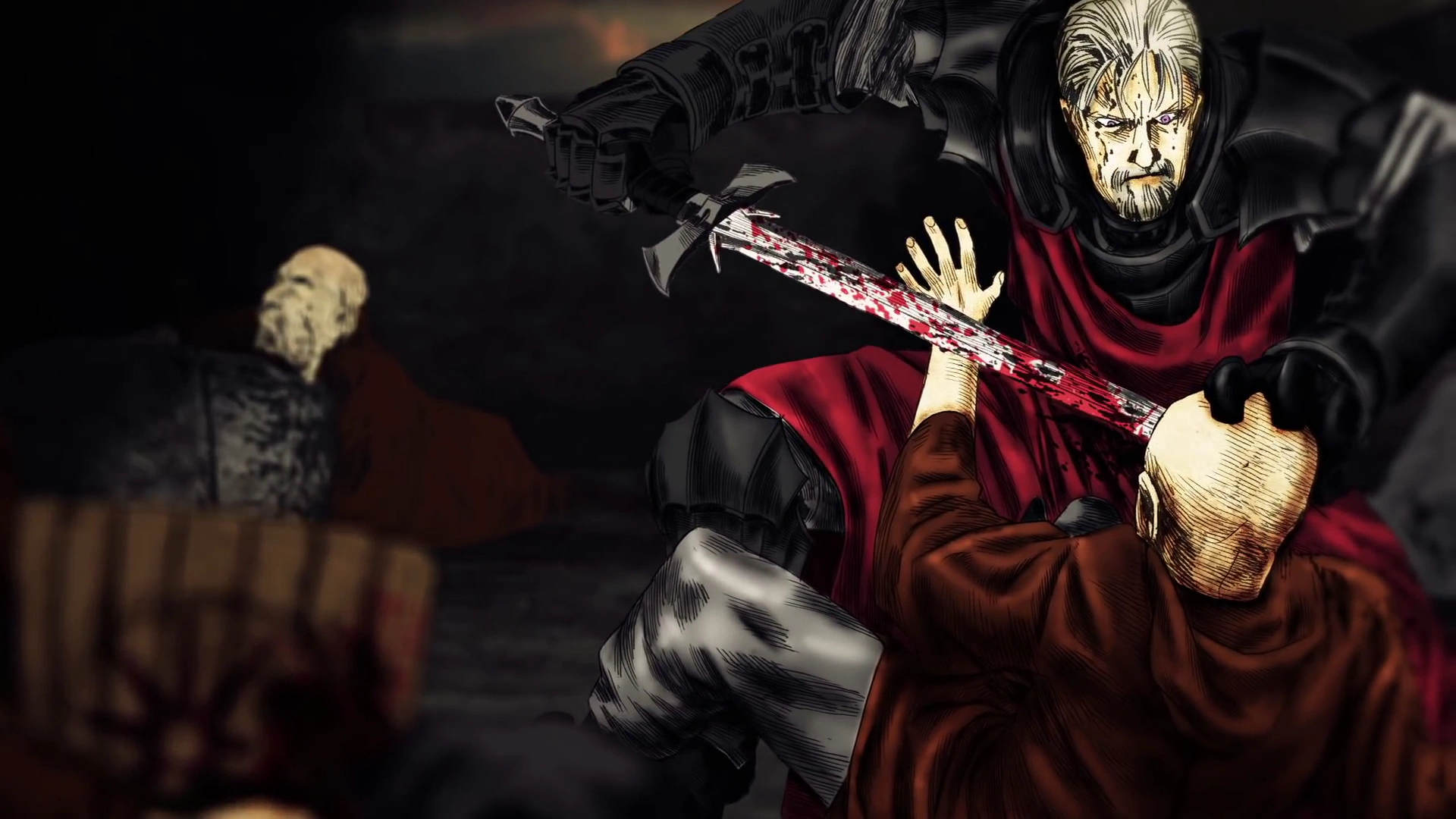
King Maegor struck back against the Faith Militant. When he arrived in King's Landing his first act was to challenge their leaders to kill him in personal combat, if they believed his rule to be ungodly. The Faith accepted, and Ser Damon Morrigen proposed they hold a trial of seven - the more dangerous but theoretically more holy variant of a traditional trial by combat in which two teams of seven men fight each other. Many tales are told of their confrontation, Ser Damon and six of the Faith Militant against Maegor and members of his Kingsguard - but all the stories agree that at the end, out of all fourteen men only Maegor himself remained alive, proving that the throne was rightfully his.
Having survived the trial of seven, Maegor promptly mounted the great black dragon Balerion - his father's old mount that Maegor mastered for himself upon his death - and flew it to the headquarters of the city's local chapter of the Faith Militant, at the Sept of Remembrance. Maegor used Balerion to burn down the sept and all who were inside while they were in the middle of the morning prayers. Hundreds of the Faith Militant burned to death, their screams echoing through the streets.
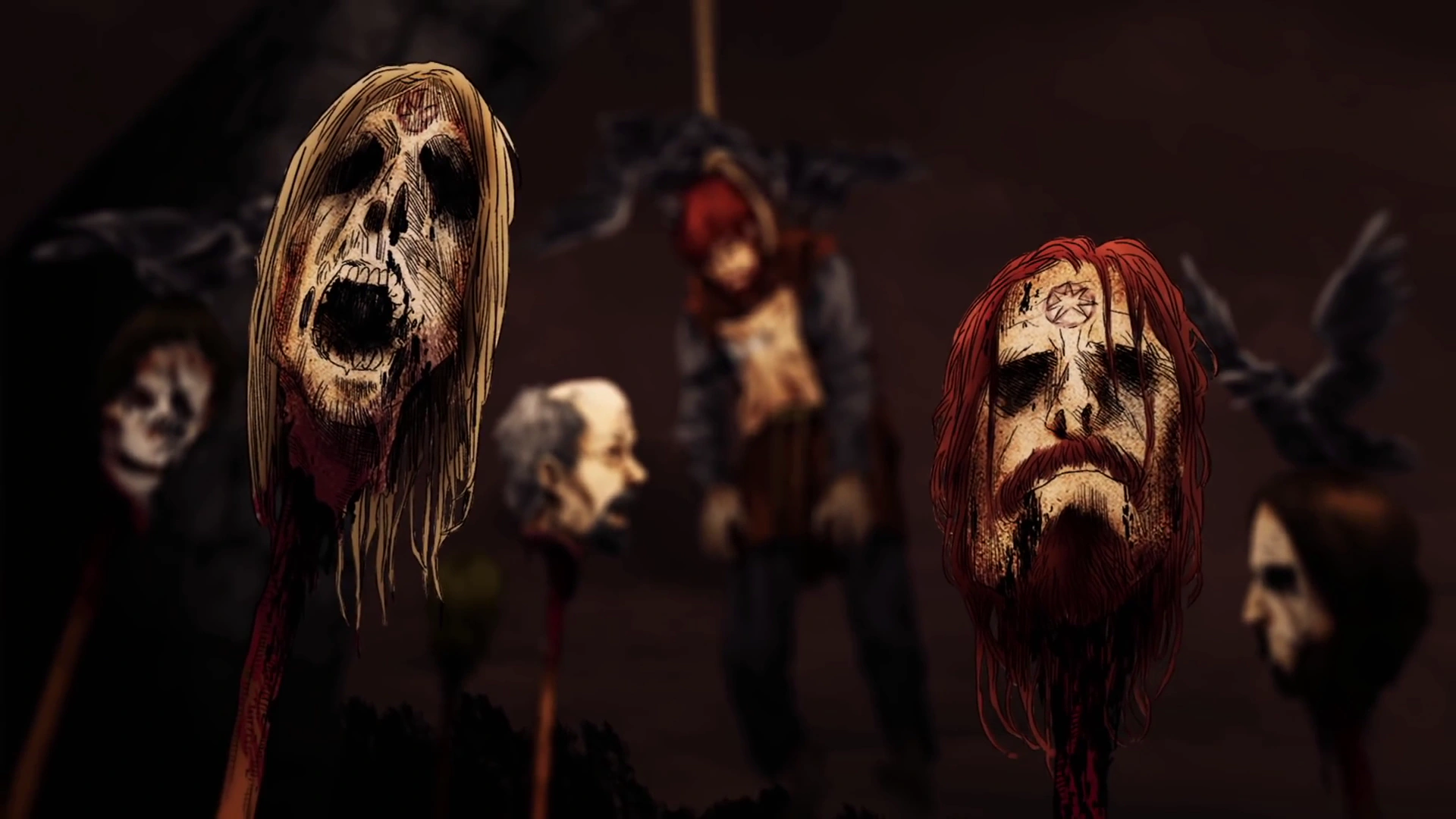
Maegor now demanded the complete destruction of the Faith Militant, and made war upon the order wherever he found it. Yet the Faith Militant would not surrender, raising its own armies across the realm, and turning some of Maegor's own lords against him. Many battles were fought as the Faith Militant uprising dragged on for years, lasting throughout all of Maegor's reign.
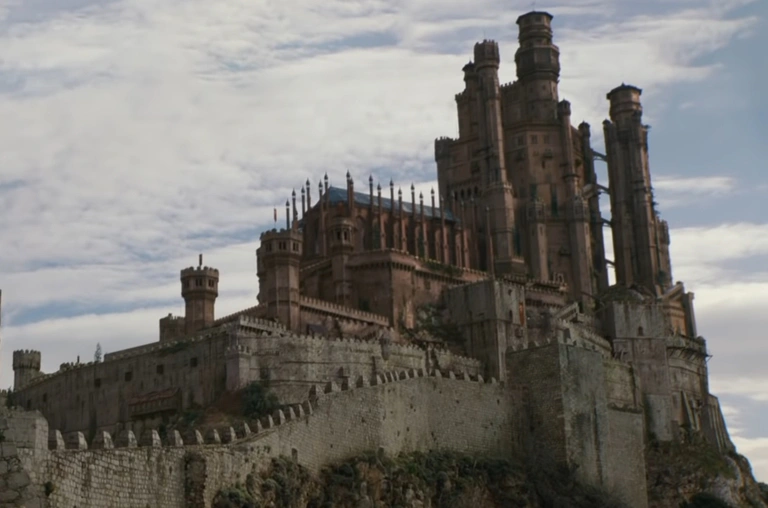
Maegor finished constructing the Red Keep during his reign, including the formidable central fortification which was named "Maegor's Holdfast" after him. After the construction was finished, Maegor had all the workers and masons killed, reportedly in order that only he would know all of the secret tunnels he had them build hidden throughout the castle.
Eventually, Maegor's reign of terror came to an end when he died upon the Iron Throne itself. Maegor's cruelty died with him, however, as he was succeeded by Aenys's remaining son, who became King Jaehaerys I. A wise and benevolent ruler, Jaehaerys I made peace with the Faith in return for disbanding the Faith Militant, ending the uprisings. Jaehaerys's subsequent long reign did much to mend the wounds to the realm caused by Maegor.
House of the Dragon: Season 1
Maegor is depicted in one of four statues in the throne room of the Red Keep, hooded and holding the sword Blackfyre.
With around seventy years having passed since Maegor's death, Princess Rhaenys Targaryen and Lord Corlys Velaryon discuss how his reign, now a lifetime ago, was the most recent great war in the Seven Kingdoms, and how the knights competing at the Heir's Tournament have never truly seen battle. Ser Otto Hightower also uses Maegor's name to evoke how much of a threat he believes Prince Daemon Targaryen would be if he ever becomes king.
Game of Thrones: Season 1
While visiting the throne room of the Red Keep, Septa Mordane quizzes Sansa Stark on her history lessons, and asks her who built the structure and the Iron Throne. Sansa correctly responds that Aegon the Conqueror made the Iron Throne, and "Maegor the Cruel" built the Red Keep.
Game of Thrones: Season 2
Wisdom Hallyne mentions that Maegor was a great patron of the Alchemists' Guild and their work producing wildfire, which he used against his enemies.
Background
In A Song of Ice and Fire, Maegor was the second son of Aegon I Targaryen. His mother was Aegon's elder sister-wife Visenya Targaryen. He was the third king of the Targaryen dynasty - usurping the throne ahead of his half-brother Aenys's children - and is infamously remembered as a brutal tyrant.

Aegon I kept a mobile royal court, making royal progresses around his new realm to bind it together, and while the Red Keep was still under construction. Aegon kept Aenys with him as his heir, while Maegor was raised back at the ancestral Targaryen seat of Dragonstone. In time Maegor was commonly referred to as "the Prince of Dragonstone" - though at the time, this was just a nickname, and it became a by-word for his status as Aenys's presumed heir.
Maegor was a preternaturally skilled swordsman (not unlike the later Jaime Lannister), as he easily defeated squires five years older than himself at the age of barely 12. He was one of the youngest men ever knighted, at only 16 years old. In contrast, King Aenys was physically frail and no great warrior, better suited to the comforts of court life and a patron of the arts. While Aenys wore fine silks at court, during his own reign Maegor most commonly wore armor, because he was constantly on military campaigns. When the two brothers were young, Aenys bonded with the dragon Quicksilver, one of the progeny of Aegon I's original three dragons. Maegor, however, refused to bond with any of the other half-dozen dragon hatchlings at the time, claiming none were worthy. Apparently, Maegor was holding out for his father's own mount, Balerion the Black Dread himself, the greatest living dragon.
Aegon the Conqueror maintained a polygamous marriage with both of his sisters: Aenys's mother Rhaenys and Maegor's mother Visenya. Aegon himself always treated Aenys as his heir apparent because he was older than Maegor - though given young Aenys's frailty, there were some who muttered that Maegor should be his heir, given that he was his "firstborn" by Visenya - those who said this were chiefly Visenya herself, and her supporters, though Aegon I would hear none of it.
Aegon I was still wary of offending the Faith of the Seven, and promised them that his family's marriage practices of incest and polygamy - which the Faith considered abominations - were a relic of the past which they would not continue in the future. To assure him of this, he had Aenys marry Alyssa Velaryon as a political match, who was mother to all of his children. Thus, the birth of Aenys's own children pushed Maegor even further back in the line of succession, as by the normal laws of Westeros an uncle only inherits after his elder brother's entire bloodline is extinguished.
Maegor's mother, Queen Visenya Targaryen, did not give up on her ambitions in court politics, however, pushing for Maegor to one day succeed ahead of Aenys. Thus, when Aenys's first child was born, his daughter Rhaena, Visenya proposed to betroth her to Maegor. King Aenys and his wife, Queen Alyssa Velaryon, however, dismissed the suggestion - both because they did not want to risk offending the Faith with such an incestuous marriage. To appease the High Septon, Maegor was to marry Lady Ceryse of House Hightower - the High Septon's own niece. As the years passed Maegor failed to produce any heir, and there were fears that he was sterile - causing him to lose supporters, who did not think it was worth upsetting Aegon I's intended succession for an heir who could not continue the family line anyway.
After Aegon the Conqueror died from a stroke in old age (in 37 AC), Aenys succeeded to the throne while Maegor successfully bonded with the great beast, and used him to devastating effect in crushing those who rebelled against the Iron Throne.
Four separate localized rebellions immediately broke out trying to seize on the opportunity of what they perceived as Aegon's weak successor: in the Iron Islands, at Harrenhal, at the Eyrie, and the "Vulture King" leading a bandit army in the Red Mountains along the border with Dorne. Their bastard uncle Orys Baratheon died from his wounds after he successfully crushed an insurrection in Dorne, and the current Hand of the King died putting down the rebels at Harrenhal, while Maegor used Balerion to successfully crush the rebels in the Vale. When the rebel lords heard Maegor and Balerion were coming, they surrendered without a fight and betrayed their ringleader Jonos Arryn (who had overthrown and killed his own brother Ronnel to seize power).They hoped that their surrender might gain them mercy, but Maegor ordered them all hanged regardless.
As a reward for his success in handling the rebellion in the Vale, Aenys named Maegor to fill the vacant office as his new Hand of the King. With Aegon I, Rhaenys, and now Orys dead, Dowager Queen Visenya became the last of the Conquest-generation of Targaryens, and she did much to aid her son in his rise to power. Aenys even gave Maegor the Valyrian steel sword of House Targaryen, Blackfyre, which had been carried by their father - openly acknowledging that Maegor was a better warrior than he ever was. For a brief two years, the two brothers ruled the realm together in peace.
Yet Maegor grew increasingly frustrated with his childless marriage, as Aenys continued to produce more heirs of his own to push him far down in line of succession, and the High Septon would never grant Maegor a separation from his own niece Ceryse. Eventually, two years into Aenys's reign Maegor polygamously took a second wife, Alys of House Harroway (the ceremony performed by Visenya, as no septon was willing to perform it); although it was not an act of incest - the main source of conflict between the Faith and the Targaryens - but polygamy, it angered the High Septon so much (since incest and polygamy are both considered as heavy sins), that Aenys had to strip his brother off his office and exile him to Pentos. Aenys then announced that he was making "Prince of Dragonstone" the official title of the designated heir to the throne - and that he was bestowing it on his son Prince Aegon, to dispel any lingering sentiments that Maegor was his direct heir ahead of his own children.
With Maegor gone, there was no pragmatic restraint on Aenys' poor decisions. Despite an already strained relationship with the Faith (due to Maegor's polygamous marriage), two years later Aenys foolishly announced the marriage of his daughter and eldest child Rhaena to his eldest son Aegon; that deed poured oil on the flames, directly sparking the Faith Militant uprising. King Aenys was physically and emotionally overwhelmed by the rebellion, and cowardly fled King's Landing entirely to withdraw to Dragonstone, where he became nearly catatonic and is said to have died of cramps brought on by the stress (though many suspect that Visenya poisoned him). Whatever the case, barely an hour after Aenys' body was cremated, Visenya flew to Pentos on her dragon Vhagar to retrieve Maegor, who flew back with her to Westeros riding Balerion.
Reign
Upon his return to Dragonstone in 42 AC, Maegor was immediately crowned king - usurping the throne ahead of Aenys's five children. Rather than wear his brother's ostentatiously large golden crown, which is inlaid with the faces of the Seven, Maegor wore their father's crown - a circlet of Valyrian steel with seven square-cut rubies set in it - symbolically asserting his status as his father's true heir (now possessing his father's crown, sword, and dragon). Grand Maester Gawen was the only one to openly protest, pointing out that Aenys had three sons (Aegon, Viserys, and Jaehaerys) and by every inheritance law in Westeros, the throne should pass to Prince Aegon. Maegor responded by declaring that the Iron Throne will go to the man who has the strength to seize it before beheading Gawen with a single swing of Blackfyre, and no one else spoke a word against him - many feeling that Aenys' young children could not handle the Faith Militant as Maegor could. Maegor retook King's Landing, won a trial by seven with the Faith Militant's upper order, the Warrior's Sons, then burned the Sept of Remembrance using Balerion to wipe out their King's Landing chapter in a single stroke. An army of the Faith Militant was slaughtered at Bitterbridge, and an even greater battle was fought at the Great Fork of the Gods Eye, with Maegor riding Balerion during a great rainstorm - this battle was bloody but decisive, with Maegor wiping out the opposing force.
Nonetheless, uprisings continued in similar though usually smaller scale flashpoints for the next six years: Maegor would always succeed in destroying the Faith Militant's armies when they marched openly against him, but he would still end up losing men and resources to attrition, and before long more new converts to the Faith Militant would pop up again in another part of the realm far away from where his main armies had currently moved. Also, when Maegor returned from the Free Cities in 42 AC he brought with him a new, third polygamous wife, called Tyanna of Pentos - rumored to be a sorceress and poisoner. Maegor appointed her as his new Mistress of Whisperers, and she became greatly feared.
In 43 AC, Aenys's son and heir Prince Aegon (who had managed to avoid capture), led his own revolt against Maegor to claim the throne that was rightfully his. This was not technically considered to be part of the Faith Militant uprising, however, because the Faith was also particularly upset about Aegon's incestuous marriage to his own sister. Prince Aegon was the new rider of his father's dragon, Quicksilver, by this time over 30 years old and a full-grown adult beast. Rebel lords rallied around Prince Aegon and his dragon, and they clashed with Maegor and his army in the great Battle Beneath the Gods Eye. Prince Aegon rode Quicksilver into battle against Maegor riding Balerion - the first time two dragons had fought each other since before the Doom of Valyria. Quicksilver, however, had no hope of defeating the older and larger Balerion, then at the height of his power and majesty: both Prince Aegon and his dragon died in the battle.
In 44 AC, the High Septon who initiated the uprising suddenly died - many suspect he was poisoned by Maegor's agents (others claim he was killed on the orders of either Lord Donnel Hightower or the Citadel before he could provoke Maegor to destroy Oldtown). He was replaced by a new High Septon who was Maegor's puppet, but the Faith Militant refused to surrender and the fighting continued. Also in 44 AC Dowager Queen Visenya died, last of the Conquest generation of Targaryens, and Maegor's greatest supporter throughout his life. He actually seemed to take her death in stride, but Aenys's widow Alyssa Velaryon - who had been held prisoner on Dragonstone - used the confusion of Visenya's death to escape, along with her two youngest children, Jaehaerys and Alysanne, and Visenya's own sword Dark Sister. Aenys's middle son Viserys was being held hostage at the Red Keep, however, and when Maegor found out about Alyssa's escape, he had Viserys tortured to death and left his nephew's body to rot in the courtyard (trying to lure Alyssa back to demand a proper funeral; after it became clear she would not take the bait, Maegor ordered Viserys's corpse cremated). In 45 AC Maegor launched into a new major campaign, which resulted in him taking the skulls of 2,000 men of the Faith Militant as trophies.
Maegor's supporters, however, grew increasingly unsettled at such open brutality. By this point his mental state was becoming increasingly unhinged (even relative to his prior actions), because none of his wives could produce him an heir - many whispering that he could not continue the Targaryen dynasty on his own.
In 44 AC, Maegor's second wife Alys became pregnant. However, she gave birth to a monstrosity, eyeless and twisted. Tyanna convinced Maegor that it was the product of an affair Alys had, so Maegor executed Alys, her midwives, the Grand Maester, and every member of House Harroway, exterminating it. Maegor's first wife Ceryse died a year later; it was rumored Maegor ordered Ser Owen Bush of the Kingsguard to cut her tongue out after an argument with Ceryse, and Bush ended up accidentally cutting Ceryse's throat when she resisted.
In 47 AC, following the deaths of Ceryse and Alys, Maegor forcibly wed three women - Jeyne Westerling, Elinor Costayne and Rhaena Targaryen - in a triple marriage ceremony (for a total of four concurrent wives). These three "Black Brides" were all the widows of men he had killed in his wars, of proven fertility because they already had children - among them his own half-niece Rhaena (whom he married in order to weaken any claim her younger siblings might put forth). Even then, two of his new wives (Jeyne and Elinor) only bore him stillborn monsters, each of which greatly distressed him, and he descended into genuine madness.
Rumors spread that Maegor was cursed: he had slain his nephew, made war against the Faith and the High Septon, defied the gods, committed murder and incest, adultery and rape; people whispered that his privy parts were poisoned, his seed full of worms, the gods would never grant him a living son. Maegor, however, settled on a different explanation: he had Tyanna forced to confess that she had actually used poison (and possibly sorcery) to produce the stillbirths in Maegor's other wives - at which he cut out her living heart with Blackfyre, and threw it to his dogs.
At this point, the realm could no longer tolerate Maegor's behavior. Later that same year in 48 AC, a new army of the Faith Militant organized, and rebel lords rallied around the fugitive Prince Jaehaerys. Maegor's own Master of Ships Daemon Velaryon left to side with the rebels, at which all of the other great lords of the realm abandoned him in short order - among them even his former close supporters like the Baratheons and even the Tullys (who had fought against Prince Aegon for him not long before).
When Maegor called on any remaining loyal lords to come to his aid, no armies came - even two of the Kingsguard abandoned him to join the growing rebel army as it advanced on King's Landing. It was only a matter of time until they reached the defenseless city. Maegor was found dead in the morning, sitting on the Iron Throne itself. The histories do not confirm exactly how he died: in some versions of the tale, he was murdered by the Iron Throne, while others suspect he was poisoned. Historians consider the most likely scenario that as Maegor sat despondently on the Iron Throne in an empty hall late at night, simply waiting for the hours to pass until the rebel army came to take the city, he looked down at the still-sharp blades that made up the Iron Throne and - resolving never to be taken alive - slit open his own wrists on the throne itself, and bled to death.
Maegor's reign of terror at an end, Aenys's rightful heir Jaehaerys was restored to the throne, ushering in an 80 year golden age for the Targaryen dynasty.
Of Maegor's six wives, only two survived him - Elinor and Rhaena.
Sources
Adapted from the original article, under CC BY-SA 3.0.