
Lore
Seven
Deity of the Faith of the Seven, the dominant religion of the Seven Kingdoms
May the Warrior grant him courage and protect him in these dark times. May the Smith grant him strength, that he might bear this heavy burden. And may the Crone, she that knows the fate of all men, show him the path he must walk and guide him through the dark places that lie ahead.
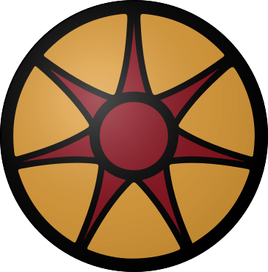
The Seven, also known as the God of Seven, the Seven Above, the seven new gods, or simply the new gods, is the deity of the Faith of the Seven, the dominant religion of the Seven Kingdoms.
The Seven-in-One God
Though the Faith teaches that there is a single deity, it has seven "aspects" or "faces". For this reason, the deity is often referred to as the "Seven-faced God". In practice, many devotees will refer to the aspects as "Gods" plural, though priests of the Faith will attempt to stress the theological nuance to their followers that there is indeed only one God, the "Seven-in-One" deity. This has not stopped the commonly heard exclamation "Gods be good!" from being used pervasively throughout the Seven Kingdoms. The Seven are referred to as "the New Gods" or "New God" to distinguish them from the Old Gods worshiped by the First Men.
According to tradition, the Seven manifested themselves to the Andals, the inhabitants of the Hills of Andalos in the continent of Essos, six thousand years before the War of the Five Kings. Soon after, the coming of the Andals occurred.
Aspects
Each of the Seven aspects symbolizes a different part of life and are prayed to for different purposes. They are known as the Father, the Mother, the Maiden, the Crone, the Warrior, the Smith, and the Stranger.

The Father
The Father represents divine justice, and judges the souls of the dead.
The Mother
The Mother represents mercy, peace, fertility, and childbirth. She is sometimes referred to as "the strength of women". Apart from human fertility, she also blesses crops with bountiful harvests.
The Mother's hymn is dedicated to Her praise.
The Maiden
The Maiden represents purity, innocence, love, and beauty. She protects the chastity of virgins, as well as protecting the innocent in general.
The Crone
The Crone represents wisdom and foresight. She is represented carrying a lantern. Sometimes She is depicted as blindfolded.
The Warrior
The Warrior represents strength and courage in battle.
The Smith
The Smith represents creation and craftsmanship. Grants workers the strength to continue their labors.
The Stranger
The Stranger represents death and the unknown. It is rarely prayed to.
The Stranger is served by an all-female monastic order, the Silent Sisters, who are tasked with preparing the bodies of the dead for funerals.
The Stranger is depicted as neither male nor female, thus the number of male and female aspects within the godhead is equal: three males (Father, Warrior, Smith), three females (Maiden, Mother, Crone), and one who is neither.
Unlike the other aspects which are represented as human figures in artwork, because the Stranger represents the unknown it is often portrayed in a wide variety of forms, often frightening. Sometimes it is represented as a skeletal figure, or a non-human creature possessing various animalistic features.
Because the Stranger represents both death and the unknown, it is also often depicted (in paintings or statues) as facing away from the viewer, so its face cannot be seen. The statue of the Stranger in the Great Sept of Baelor is faced towards the wall behind it, away from the room. This statue depicts the Stranger as a gaunt figure, holding a scythe. The Stranger can also be depicted with its hair hanging down over the front of its head instead of the back, obscuring its face.
Sources
Adapted from the original article, under CC BY-SA 3.0.